How to Write a U.S. Resume as an Australian (And Why Yours Keeps Getting Rejected)
If you’re an Australian applying for jobs in the United States, there’s a high chance your resume is working against you, even if you’re highly qualified.
I know this because I’ve been there.

Before landing marketing roles in the U.S. on a J-1 visa and later multiple E-3 visas, I applied for dozens of jobs with my “perfect” Australian resume… and heard nothing back. No interviews. No callbacks. Just silence.
The turning point? Learning that U.S. resumes follow completely different rules, and that recruiters can spot an “Australian resume” instantly.
This guide will walk you through why that happens, what U.S. employers expect instead, and how you can fix it.
Why Australian Resumes Don’t Work in the U.S.
One of the biggest mistakes Australians make when applying for U.S. jobs is assuming resumes are universal. They’re not.
Here’s what immediately flags your resume as non-U.S.:
A 2-4 page resume (U.S. standard is 1 page for most roles)
A personal profile or objective
Listing date of birth, nationality, or visa status
Overly formal wording
Duties are listed instead of measurable achievements
U.S. recruiters spend 6-8 seconds scanning a resume. If yours doesn’t follow U.S. formatting and language, it often won’t even make it past the first scan, or the ATS (Applicant Tracking System).
The Biggest Difference: U.S. Resumes Are Results-Focused
In Australia, resumes often explain what you did.
In the U.S., resumes show what you achieved.
For example…
Australian style:
Managed social media accounts and created content
U.S. style:
Increased Instagram engagement by 47% in 6 months through a short-form video strategy and analytics-driven content.
This shift alone can be the difference between rejection and an interview.
The Hidden Problem: ATS (Applicant Tracking Systems)
Most U.S. companies use ATS software to filter resumes before a human ever sees them.
If your resume:
Uses the wrong headings
Isn’t keyword-optimised
Has columns, tables, or graphics
Uses Australian spelling inconsistently
…it may never reach a recruiter at all.
This is something I learned the hard way while applying for U.S. marketing roles, and it’s why I created a step-by-step solution instead of generic advice.
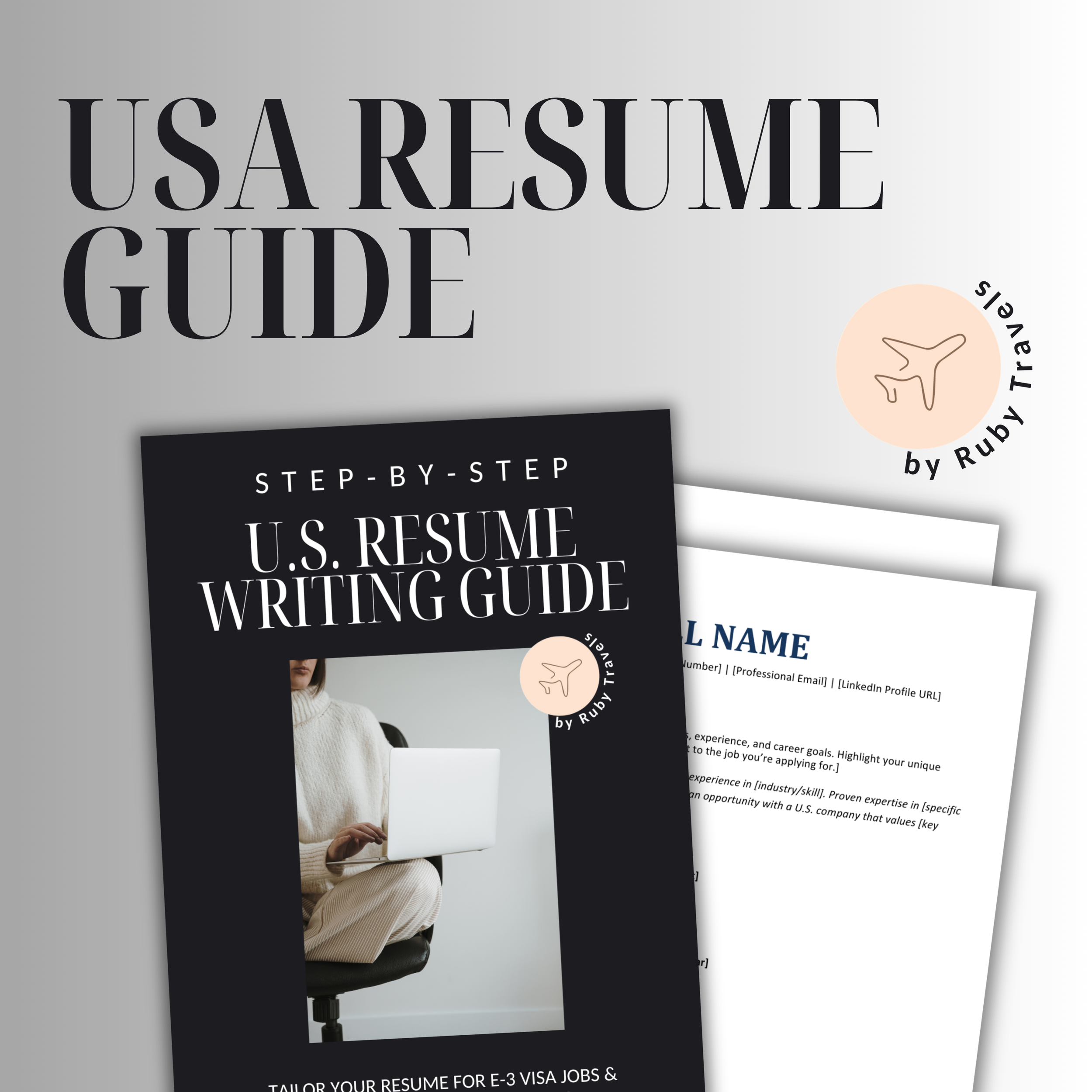
My Step-by-Step U.S. Resume Writing Guide for Australians
After years of working in the U.S. job market, I created a U.S. Resume Writing Guide specifically for Australians who want to work in America.
This isn’t a generic Canva template; it’s the exact framework I’ve used to:
Secure interviews in the U.S.
Land roles on J-1 and E-3 visas
Pass ATS screenings
Apply confidently as a non-U.S. citizen
What’s Included in the Resume Guide
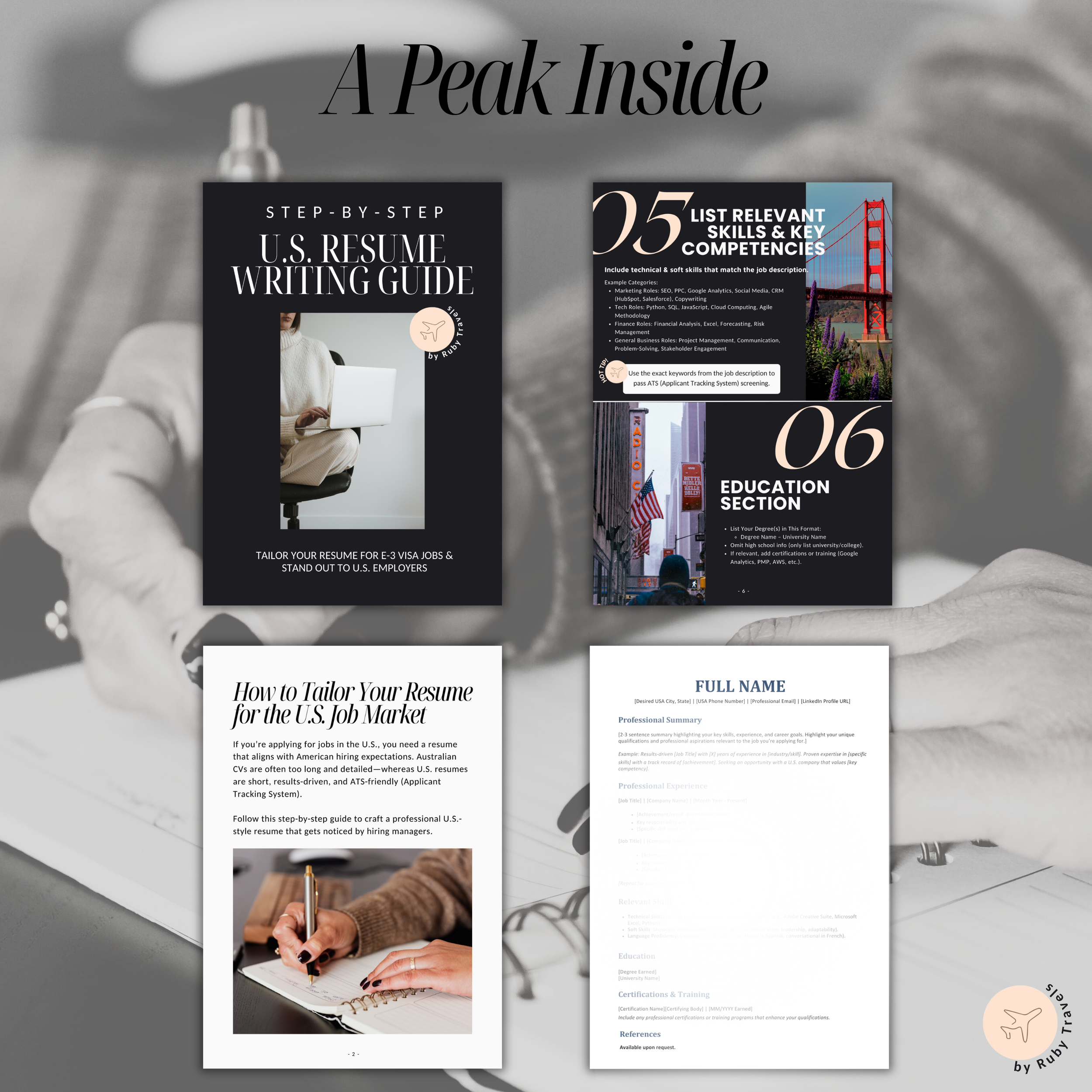
Inside the guide, you’ll learn:
✅ The exact U.S. resume structure recruiters expect
✅ How to convert your Australian experience into U.S.-friendly language
✅ What to remove immediately from your resume
✅ How to write strong, quantified bullet points
✅ ATS-safe formatting that won’t get filtered out
✅ Real examples you can adapt for your own resume
It’s designed for:
Australians applying for U.S. jobs
E-3 and J-1 visa holders
Graduates and professionals at any stage
Anyone applying from Australia or already in the U.S.
Do You Still Need a Cover Letter?
Short answer: Sometimes, but your resume matters more.
In the U.S., many companies don’t require cover letters at all. When they do, it’s often skimmed after your resume passes ATS and recruiter review.
That’s why your resume needs to be doing the heavy lifting.
Final Thoughts: You Don’t Need to Be “More Qualified”
If you’re not hearing back from U.S. employers, it’s usually not because you lack experience.
It’s because your resume:
Doesn’t follow U.S. standards
Isn’t ATS-optimised
Reads as international (in the wrong way)
Once I fixed my resume, everything changed: interviews, offers, and confidence.
If you want to skip the trial-and-error phase and apply with clarity, my guide will save you hours of frustration.
FOLLOW ME: